Saturday, April 23, 2011
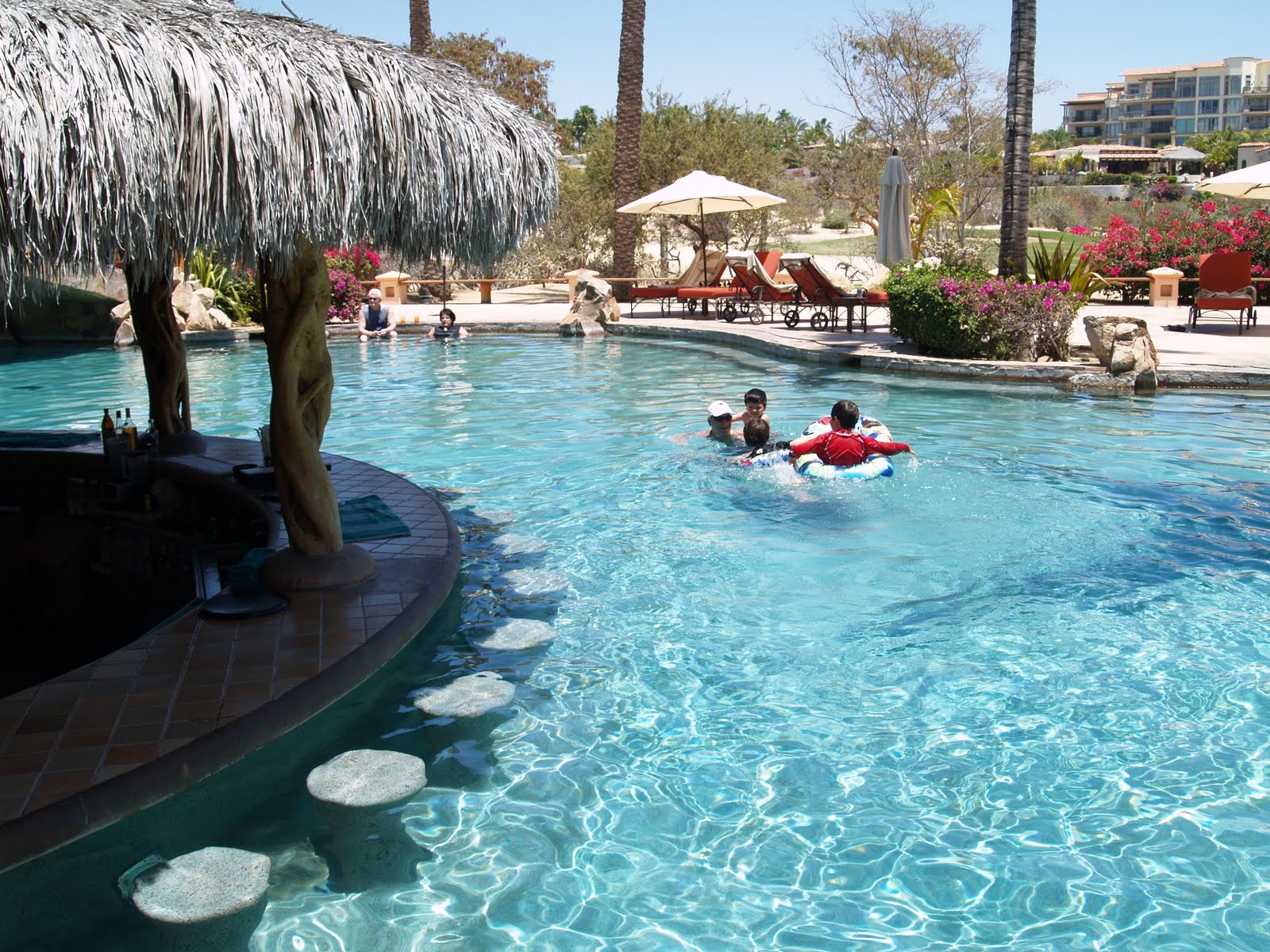
Water Filled Family Vacation

Monday, April 18, 2011
Trimming of the Plug - April 6, 2011

It was also at this time that we did the second of three audiological tests at the CEI. The results indicated that Ben's hearing was pretty much unchanged from prior to the surgery. The results didn't make any sense, because we were certain that he could hear us from his new right ear. Whereas before the surgery he could not hear at all from that side, after the surgery we could whisper on that side and have a conversation with Ben...
We were to continue putting Tobramycin drops in his ear canal twice a day. His healing was going really well - no signs of infections or stenosis.
Sunday, April 10, 2011
Great Things to Do In Palo Alto

In a very short period of time, Ben was running around like nobody's business. Among other things, Ben visited the Totem Garden/sanctuary at Stanford University (I'm hoping that the spirits are glad that this little boy was having so much fun with them), played around the fantastic living sculpture/tunnel cave/structure in front of the Palo Alto Library and went to the Palo Alto Junior Museum and Zoo. Also, Create It Ceramics and Glass Studio in the Town & Country Mall in Palo Alto is awesome. The Gamble Garden is a nice place for a walk in beautiful grounds.
 In San Francisco (where we are originally from) we checked out the relatively new California Academy of Sciences Steinhart Aquarium. It has an environmental theme, and there is a multi-story butterfly sanctuary that is really cool and where butterflies literally land on you. Other really fun things to do are: the Bay Area Discovery Museum (which is right across the Golden Gate Bridge), the Exploratorium in the Palace of Fine Arts (located in San Francisco's Marina district), Alta Plaza Park in San Francisco's Pacific Heights is one of our favorite parks, has a great kid's playground and great views of the City, and the Farmer's Market at the San Francisco's Ferry Building.

Friday, April 8, 2011
Days Immediately Following Canalplasty with Dr. Roberson
The most amazing thing was that Ben appeared to hear us from the start from his right ear. While lying on a pillow on his left ("big") ear, we could whisper into his new canal and he could hear what we were saying.
There was an antibiotic-infused plug (looked like a regular foam ear plug from Walgreens but ~$20,000) put in Ben's new ear canal. The key was making sure that the ear plug stayed moistened by Tobramycin drops twice a day and that the plug didn't come out. So no running, jumping, fighting, wrestling... all of those things 5 year old boys love to do!
Also, part of the skin on his head was used to line the new canal. That area from which they grafted is the part that would give him the most discomfort, they said. They also said that the actual ear canal would not hurt because there aren't nerves there!
After the surgery, Ben got a brightly-colored purple head bandage which he definitely did not like when he came out of the anesthesia fog. They indicated that kids frequently come "out of it" in a very bad mood -and we definitely experienced that. Ben was thrashing around not liking the IV in his hand nor the wrap on his head. (Not surprising, huh?)
 We stayed in Palo Alto for a few days so that Ben could "chill out" san temptations of rowdy brothers. In the days immediately following the surgery, we tried to rest a bit (wake up late, take mid-day naps) and have one fun outing. We colored, cooked and played with some new toys. Ben was a little embarrassed about his head wrap...
To the left is a photo of Ben the afternoon after the surgery.

April 1, 2011. A day after the surgery, Dr. Jennifer Grady, an ENT fellow with Dr. Roberson, removed the head bandages. Ben liked that a lot. Cheryl Medina, Dr. Roberson's Surgery Coordinator, is standing to the left. There was a scabby and shaved square on his scalp whence the graft had come. Ben was really careful of his head and seemed unfazed by the recent surgery.
There was an antibiotic-infused plug (looked like a regular foam ear plug from Walgreens but ~$20,000) put in Ben's new ear canal. The key was making sure that the ear plug stayed moistened by Tobramycin drops twice a day and that the plug didn't come out. So no running, jumping, fighting, wrestling... all of those things 5 year old boys love to do!
Also, part of the skin on his head was used to line the new canal. That area from which they grafted is the part that would give him the most discomfort, they said. They also said that the actual ear canal would not hurt because there aren't nerves there!
After the surgery, Ben got a brightly-colored purple head bandage which he definitely did not like when he came out of the anesthesia fog. They indicated that kids frequently come "out of it" in a very bad mood -and we definitely experienced that. Ben was thrashing around not liking the IV in his hand nor the wrap on his head. (Not surprising, huh?)
 We stayed in Palo Alto for a few days so that Ben could "chill out" san temptations of rowdy brothers. In the days immediately following the surgery, we tried to rest a bit (wake up late, take mid-day naps) and have one fun outing. We colored, cooked and played with some new toys. Ben was a little embarrassed about his head wrap...
To the left is a photo of Ben the afternoon after the surgery.

April 1, 2011. A day after the surgery, Dr. Jennifer Grady, an ENT fellow with Dr. Roberson, removed the head bandages. Ben liked that a lot. Cheryl Medina, Dr. Roberson's Surgery Coordinator, is standing to the left. There was a scabby and shaved square on his scalp whence the graft had come. Ben was really careful of his head and seemed unfazed by the recent surgery.
Monday, April 4, 2011
Canalplasty with Dr. Joseph Roberson - March 31, 2011
March 31, 2011. We went to Dr. Joseph Roberson (pronounced like "Robertson" but without the "t") two times (3/7/11 and 3/28/11) for long-awaited canalplasty appointments only to find out that Ben had slight temperatures and that they preferred to postpone surgery. Ben had been acting completely normal (active as usual) so we were not aware that he had a temperature. (I think the temperature was around 100 degrees.) Back in the truck! Ben practically memorized the Star Wars series.
When we went to Dr. Roberson's office the third time (March 31, 2011), and he had a temperature again, we decided to go ahead with the canalplasty.
After the surgery, when Ben was still in the OR but the surgery was over, Dr. Roberson came out and told us that everything went well and that Ben's anatomy was good because they were able to make a nice big canal. He said that there was little to no risk of stenosis (narrowing/closing of the canal). Some people who are familiar with this surgery will ask, when Ben got his cat scan, what was his rating. He was an 8 out of 10.

When we went to Dr. Roberson's office the third time (March 31, 2011), and he had a temperature again, we decided to go ahead with the canalplasty.
We arrived at the Waverly Surgery Center in downtown Palo Alto. There is good free parking under the building. It was definitely one of the most heart breaking experiences seeing the OR doors close behind your little kid on the gurney. Thinking about what he's about to go through is quite emotional. Because Ben is a minor, either parent had to be in the building throughout the surgery, which lasted from about 7:30 AM - 11:00 AM. The doctors called us or came to give us an update at least twice during the surgery, which was very reassuring.
After the surgery, when Ben was still in the OR but the surgery was over, Dr. Roberson came out and told us that everything went well and that Ben's anatomy was good because they were able to make a nice big canal. He said that there was little to no risk of stenosis (narrowing/closing of the canal). Some people who are familiar with this surgery will ask, when Ben got his cat scan, what was his rating. He was an 8 out of 10.

One thing was because he had a cold and his ear anatomy was swollen, it sounded like they did not do everything that they might have to his three little bones. Therefore, they said that they might have to do a revision on them.
Can't express how relieved we were to have that part of the experience "over." We were so concerned about the canalplasty because of the risks of surgery in general and because of its proximity to the facial nerve and because of the risk of affecting the cochlea.
Long term effects of multiple surgeries and exposure to anesthesia. One of the reasons why we did not want to jump into doing the surgery was because of our concern about multiple exposures to anesthesia and the potential effects on mental development. After asking nearly every doctor and surgeon we encounter about the long term adverse effects of surgery on a child, it sounds like nearly everyone agrees that it's not ideal (due to the anesthesia) and that's part of the decision you need to weigh. This article summarizing a Mayo Clinic study suggests that more than one surgery with general anesthesia more than doubles the changes that a child will develop learning disabilities. This is another article on the topic suggests that the anesthetic, ketamine, in particular may be associated with a higher risk of having future learning disabilities. One doctor said: "It's not until you get to around 4 surgeries that there seems to be an effect..." I was thinking that we'd probably have around 4 (with the potential revisions, etc.) so this was not very reassuring!
Long term effects of multiple surgeries and exposure to anesthesia. One of the reasons why we did not want to jump into doing the surgery was because of our concern about multiple exposures to anesthesia and the potential effects on mental development. After asking nearly every doctor and surgeon we encounter about the long term adverse effects of surgery on a child, it sounds like nearly everyone agrees that it's not ideal (due to the anesthesia) and that's part of the decision you need to weigh. This article summarizing a Mayo Clinic study suggests that more than one surgery with general anesthesia more than doubles the changes that a child will develop learning disabilities. This is another article on the topic suggests that the anesthetic, ketamine, in particular may be associated with a higher risk of having future learning disabilities. One doctor said: "It's not until you get to around 4 surgeries that there seems to be an effect..." I was thinking that we'd probably have around 4 (with the potential revisions, etc.) so this was not very reassuring!
Above is a pic of Ben in the surgery center while still asleep from the anesthesia. One other note is that they said it was fairly common for children to have a "bad" experience while coming out of the anesthesia. We definitely experienced that. Ben is strong willed to begin with, but when he came out of the fog of the anesthesia with the residual drugs in his body, the IV in his hand and the huge bandage on his head, he was a bit out of sorts.
Doctor's orders:
- No jumping, running, wrestling, etc.
- No holding in sneezes (puts pressure on the ear drum) - just let it go
- No blowing nose - just wipe runny nose
- No swimming, bathing under water, getting ear or head wet
- No drinking from a sippy cup or drinking from a straw
- No sleeping on the operated side
- No aspirin or Motrin (Tylenol only)
- Flying in an airplane was OK after 2 weeks!
Tuesday, January 4, 2011
Phone Consultation with Dr. Roberson
January 4, 2011. By the beginning of the year, my husband was still very skeptical/reluctant/annoyed-at-me-for-wanting-to-talk-about-it about doing any surgery. I felt like I was twisting his arm. He indicated that he needed to learn more and get comfortable with the idea - so he scheduled a phone consultation with Dr. Roberson on January 4. We talked to several other families across the country that went through with both surgeries to hear about their experiences. Those conversations were very good, because we heard about the realities and challenges of going through with the surgeries. They were not sugar-coated conversations.
Devin. Also, through Dr. Lewin, we got hooked up with another LA family whose son, Devin, had bilateral microtia and was close to Ben's age and who had completed canalplasty and microtia repair on both ears with Drs. Roberson and Lewin. We had a play date with Devin in February 2011 that was really fun - especially since Ben didn't know that Devin had microtia when he had already started to jump around and play with him - and then at some point - Ben whispered to me: "Don't tell him I have a little ear." To which I said, "OK. But do you know that Devin had TWO little ears?" Then, Ben lit up and said, "REALLY?" And then Devin showed Ben his ears. And there was an instant bond!
Devin. Also, through Dr. Lewin, we got hooked up with another LA family whose son, Devin, had bilateral microtia and was close to Ben's age and who had completed canalplasty and microtia repair on both ears with Drs. Roberson and Lewin. We had a play date with Devin in February 2011 that was really fun - especially since Ben didn't know that Devin had microtia when he had already started to jump around and play with him - and then at some point - Ben whispered to me: "Don't tell him I have a little ear." To which I said, "OK. But do you know that Devin had TWO little ears?" Then, Ben lit up and said, "REALLY?" And then Devin showed Ben his ears. And there was an instant bond!
Monday, October 4, 2010
Anguished Decisions
Anguished Discussions Over the Following Months (May 2010 - Dec 2010). This all seems like a blur to me now. I thought that if we were planning on doing the surgery, we should get our heads around it sooner rather than later because it's nice if you do it while the kid is young and having microtia doesn't become a defining part of his or her personality. That's just my perspective; there are lots of other opinions, too.
I definitely heard a lot, such as: (1) wait until the technology and techniques have improved, (2) wait until Medpor is more proven, (3) don't do anything, it's all too risky and not worth the potential upside given that his hearing is OK in his left ear and his face is so cute and his little ear is cute also. We had lots of family and friends who hooked us up with their ENT friends. Honestly, most ENTs - even world-renown ones - don't know that much about microtia aural atresia unless they specialize in that area. Therefore, unsolicited advice and "Did you call uncle so-and-so?"s were usually well intended attempts at helping me that were actually time consuming and not very helpful.
In the end, I ended up scheduling the appointments for surgeries so that we had those options, but my husband and his family were fairly opposed to doing the surgeries. I, too, was really concerned - as there are significant risks. Even up to the night before the canalplasty surgery, we were in tears thinking about subjecting our child to those risks. It is not an easy decision.
I definitely heard a lot, such as: (1) wait until the technology and techniques have improved, (2) wait until Medpor is more proven, (3) don't do anything, it's all too risky and not worth the potential upside given that his hearing is OK in his left ear and his face is so cute and his little ear is cute also. We had lots of family and friends who hooked us up with their ENT friends. Honestly, most ENTs - even world-renown ones - don't know that much about microtia aural atresia unless they specialize in that area. Therefore, unsolicited advice and "Did you call uncle so-and-so?"s were usually well intended attempts at helping me that were actually time consuming and not very helpful.
In the end, I ended up scheduling the appointments for surgeries so that we had those options, but my husband and his family were fairly opposed to doing the surgeries. I, too, was really concerned - as there are significant risks. Even up to the night before the canalplasty surgery, we were in tears thinking about subjecting our child to those risks. It is not an easy decision.
Thursday, May 27, 2010
Scheduling the Atresia Repair with Dr. Roberson
Scheduling the Canalplasty. Starting in May 2010, I emailed Cheryl Medina (Dr. Roberson's Surgery Coordinator) our preferences for 2011 canalplasty. Our first choice was in April around Spring Break, second was in January around Winter Break and third was at the beginning of the summer. She said that we were #8 on the waiting list for 2011. As time got closer, and through ongoing conversations with Cheryl Medina, we finally settled on a Canalplasty date of March 7, 2011, right after Ben's brother's birthday and a little bit before Spring Break so that he would have some time to recover in time for and during Spring Break. Also, he'd have about three months to recover before surgery at the beginning of the summer. In the end, as you'll see, we didn't end up doing surgery on March 7 - but fortunately, we live in LA, and that was OK!
Wednesday, May 26, 2010
CAT Scan with California Ear Institute - Dr. Roberson
California Ear Institute and Dr. Joseph Roberson. May 26, 2010. At this point, Ben was four years and seven months old. I had decided to give up on the possibility of my insurance ever covering a low dose CAT scan, so I had called Dr. Roberson's office, and they happened to have a cancellation, so I quickly planned to cancel all of my appointments and drive with Ben to San Francisco the following day. We got a 3:30PM appointment, so we could leave first thing in the morning and get there with plenty of time.
This was the first time that I had met/seen Dr. Roberson since Ben was an infant, and re-meeting Dr. Roberson - he was very nice and reassuring. He came into a room and reviewed the results with us while my husband was on speaker phone (by cell phone - Dr. Roberson's patient rooms do not have any wired phones). He indicated that Ben was rated an "8 out of 10" with 10 being the best. He said that 8-10 ratings are good candidates for canalplasty.
It nice to hear that we had the option to do canalplasty if we chose to do so. A lot of things to think about...The CAT scan was about $1,000. I explained to Dr. Roberson that I was paying out of pocket, and he very kindly gave me a discount. Yet another example of how these doctors don't do this for the money - they seem to really care about their patients. It was a really kind gesture that I appreciated greatly.
This was the first time that I had met/seen Dr. Roberson since Ben was an infant, and re-meeting Dr. Roberson - he was very nice and reassuring. He came into a room and reviewed the results with us while my husband was on speaker phone (by cell phone - Dr. Roberson's patient rooms do not have any wired phones). He indicated that Ben was rated an "8 out of 10" with 10 being the best. He said that 8-10 ratings are good candidates for canalplasty.
It nice to hear that we had the option to do canalplasty if we chose to do so. A lot of things to think about...The CAT scan was about $1,000. I explained to Dr. Roberson that I was paying out of pocket, and he very kindly gave me a discount. Yet another example of how these doctors don't do this for the money - they seem to really care about their patients. It was a really kind gesture that I appreciated greatly.
Thursday, September 4, 2008
Insurance Companies and Coverage for Low Dosage CAT Scans
September 3, 2008 - May 28, 2011. It's hard to believe it now, but as I look back at emails from the period, I spent one year and seven months trying to get my insurance to cover the cost of a low dosage CAT scan. After our September 3, 2008 visit with Dr. Lewin in which she indicated that Ben would need a CAT scan to see whether he as a candidate for canalplasty, I started to do a little research.
As mentioned in the "Associated Topics" blog, I had been asked by so many specialists over the years to get a CAT scan of Ben - and I'm so glad that I followed the advice of my pediatrican who said, "Don't do it yet!" The amount of radiation that a child is exposed to from a CAT scan is thousands of times more than an x-ray and it is at levels intended for an adult. In addition, the reason why radiation is considered dangerous and a potential carcinogen is because of the possiblity that radiation can cause cell mutations. If the cell mutation happens in a 60 year old, there is much less time (between 60 and the end of the 60 year old's life) for the cells to become cancerous. In a child, there is an entire lifetime during which the cells can grow and become cancerous. Furthermore, a child goes through much more dramatic growth than an adult. Therefore, there are lots of reasons why it's a good idea to be circumspect about the amount of radiation to expose your child to. Yet most CAT scan machines are built with only adult proportions in mind. Since the machines are incredibly expensive and need to pay for themselves and then generate revenue for the hospitals, it's not "worth it" for hospitals to invest in additional low-dosage machines. For microtic children, knowing that surgery was not an option until, at the earliest, three years old, why expose a baby or toddler to the radiation?
When I called the California Ear Institute (CEI) to inquire about the annual conference, Sheri Bryne (who is a wonderful resource for microtia but who no longer works at the CEI :( infomred me that Dr. Joseph Roberson's office had a special low dose radiation CAT scan machine made by Xoran that generates more accurate CAT scans with 1/10 the level of radiation. We proceeded to get a hand-written note from Dr. Lewin and my pediatrician, Dr. Keene to my insurance company, about the need for the low dosage CAT scan (of which there are none at all of the radiation labs in all of the hospitals associated with Cedars Sinai in Los Angeles)! The claim was denied and the only CAT scans that they would refer Ben to were those at Cedar Sinai Hospital with "regular" CAT scan machines at regular adult levels of radiation. I have copies of all of these notes and email exchanges between the different parties - it ain't pretty. We sent articles, research, went through an appeals process - everything. No dice! After trying for over a year, I finally decided that time was ticking and I would pick up the tab myself. Interestingly, Cedar Sinai is also one of the hospitals in the US that was caught over-radiating patients. Here are two good articles on this topic, one overview and one more specific that includes reference to Cedar Sinai.
Anyway, even though insurance would not pay for it, after a year and a half +, I ended up just calling Dr. Roberson's office in Palo Alto. They happened to have a cancellation the following day, and I cancelled my appointments the following day and high-tailed it to their Palo Alto offices for a Xoran CAT scan.
As mentioned in the "Associated Topics" blog, I had been asked by so many specialists over the years to get a CAT scan of Ben - and I'm so glad that I followed the advice of my pediatrican who said, "Don't do it yet!" The amount of radiation that a child is exposed to from a CAT scan is thousands of times more than an x-ray and it is at levels intended for an adult. In addition, the reason why radiation is considered dangerous and a potential carcinogen is because of the possiblity that radiation can cause cell mutations. If the cell mutation happens in a 60 year old, there is much less time (between 60 and the end of the 60 year old's life) for the cells to become cancerous. In a child, there is an entire lifetime during which the cells can grow and become cancerous. Furthermore, a child goes through much more dramatic growth than an adult. Therefore, there are lots of reasons why it's a good idea to be circumspect about the amount of radiation to expose your child to. Yet most CAT scan machines are built with only adult proportions in mind. Since the machines are incredibly expensive and need to pay for themselves and then generate revenue for the hospitals, it's not "worth it" for hospitals to invest in additional low-dosage machines. For microtic children, knowing that surgery was not an option until, at the earliest, three years old, why expose a baby or toddler to the radiation?
When I called the California Ear Institute (CEI) to inquire about the annual conference, Sheri Bryne (who is a wonderful resource for microtia but who no longer works at the CEI :( infomred me that Dr. Joseph Roberson's office had a special low dose radiation CAT scan machine made by Xoran that generates more accurate CAT scans with 1/10 the level of radiation. We proceeded to get a hand-written note from Dr. Lewin and my pediatrician, Dr. Keene to my insurance company, about the need for the low dosage CAT scan (of which there are none at all of the radiation labs in all of the hospitals associated with Cedars Sinai in Los Angeles)! The claim was denied and the only CAT scans that they would refer Ben to were those at Cedar Sinai Hospital with "regular" CAT scan machines at regular adult levels of radiation. I have copies of all of these notes and email exchanges between the different parties - it ain't pretty. We sent articles, research, went through an appeals process - everything. No dice! After trying for over a year, I finally decided that time was ticking and I would pick up the tab myself. Interestingly, Cedar Sinai is also one of the hospitals in the US that was caught over-radiating patients. Here are two good articles on this topic, one overview and one more specific that includes reference to Cedar Sinai.
Anyway, even though insurance would not pay for it, after a year and a half +, I ended up just calling Dr. Roberson's office in Palo Alto. They happened to have a cancellation the following day, and I cancelled my appointments the following day and high-tailed it to their Palo Alto offices for a Xoran CAT scan.
Wednesday, September 3, 2008
Initial Visit to Dr. Sheryl Lewin - September 3, 2008
September 3, 2008. We first visited Dr. Lewing when Ben was shy of three years old. Initially we went to see Dr. Lewin because (1) our pediatrican had referred us to her, (2) we knew she worked with "the best surgeon for Medpor," (3) I had heard from someone at LAUSD that her ears were actually very good, and (4) she was covered by my insurance.
After visiting with Dr. Lewin, we were definitely impressed by the number of microtia repairs she had done, and by how good they looked. Check out this YouTube video of a number of before and after Dr. Lewin patients. Also, Dr. Lewin is very personable and nice. While both she and Dr. Reinisch clearly have a deep love of their patients, she has a more maternal and playful personality than Dr. Reinisch. (Update as of August 2012: As of the beginning of 2012, Dr. Lewin is no longer practicing with Dr. Reinisch. Click on this link to see her independent practice website.) By this point, Ben was about three +, and that is around the age when the surgery can be considered. By the time we met with Dr. Lewin, I think that both my husband and I thought that, if we were to do Medpor, she would be just as good to go with as Dr. Reinisch, her mentor.
Dr. Lewin said that if we were considering getting the atresia repair surgery or the combined microtia/aural atresia surgery, we needed to get a CAT scan of Ben's ear anatomy to see if canalplasty were an option. A short summary of the timing and key differences for the two methods:
After visiting with Dr. Lewin, we were definitely impressed by the number of microtia repairs she had done, and by how good they looked. Check out this YouTube video of a number of before and after Dr. Lewin patients. Also, Dr. Lewin is very personable and nice. While both she and Dr. Reinisch clearly have a deep love of their patients, she has a more maternal and playful personality than Dr. Reinisch. (Update as of August 2012: As of the beginning of 2012, Dr. Lewin is no longer practicing with Dr. Reinisch. Click on this link to see her independent practice website.) By this point, Ben was about three +, and that is around the age when the surgery can be considered. By the time we met with Dr. Lewin, I think that both my husband and I thought that, if we were to do Medpor, she would be just as good to go with as Dr. Reinisch, her mentor.
Dr. Lewin said that if we were considering getting the atresia repair surgery or the combined microtia/aural atresia surgery, we needed to get a CAT scan of Ben's ear anatomy to see if canalplasty were an option. A short summary of the timing and key differences for the two methods:
- Medpor approach:
- The Medpor approach uses a synthetic medpor frame to create the shape of the ear. The main disadvantage is concern that if the ear is traumatized through an accident or sports and the ear is cut, the medpor could be exposed and necessitate surgery to repair.
- If the patient is going to have canalplasty, the canalplasty surgery happens first, then the medpor microtia repair follows. Surgery can begin as young as three years of age.
- This method is much newer than the rib graft method, so there aren't examples of people who have had the medpor framework for 20+ years like there are for rib graft. However, medpor has been used in bodies for a long time; and medpor seems to last.
- Dr. John Reinisch is the pioneer of the medpor method.
- Rib Graft approach:
- The rib graft approach has been used for a much longer period of time and has a long-term track record of success. It uses the individual's own cartilage (from between the ribs) as the framework of the ear, so any injury to the ear would heal the way the body heals.
- If using the rib graft approach to microtia repair, the microtia repair happens first and then the canalplasty follows. Because this method requires that the cartilage be large enough to be sculpted into an ear frame shape, the child must be at least eight years of age to start surgery. Removing the cartilage essentially requires one more "step" than the medpor approach - but the benefit is the 100% organic origins of the framework.
- Having a skilled and experienced surgeon is critical for both approaches, but it's particularly important for the rib graft approach because the cartilage framework is carved by the surgeon during the surgery.
- Dr. Burt Brent is one of the best and leading pioneers of the rib graft method.
Friday, August 11, 2006
A Summary of All Experiences with Doctors, Specialists, Insurance and Unified School District Employees Leading Up to Microtia Repair
The following notes below include some information on the following topics:
I attended the "Let Them Hear Foundation" conference in Palo Alto in October 2006, and I met with some of the leading doctors in the overall field: Dr. John Reinisch, Dr. Joseph Roberson and Dr. Burt Brent. The conference is incredibly helpful and worth going to, if not for any other reason, it's a great way to meet some of the leaders in the field without having to travel to their respective offices.
VISITS WITH VARIOUS SPECIALISTS AND WHAT WE FOUND
Over the past years, we have lived in both San Francisco and Los Angeles and made many visits between the two cities to visit doctors. I haven't kept track of exactly how many, but we've probably seen between 10 - 25 of specialist reconstructive surgeons, ENTs, audiologists, etc. at Cedars Sinai (LA), University of California at San Francisco (UCSF), the California Ear Institute (Palo Alto), the House Ear Institute (LA) and others. What we found was that, even at very elite hospitals, there aren't that many doctors and specialists who are very knowledgeable about microtia and atresia. In fact, I felt like I was educating quite a few of them about microtia and atresia. Despite their lack of expertise, not one said what they should have: "This is a highly specialized area, and you should really talk with doctors who have seen hundreds of cases. There are only a few such doctors in the US."
Based on my admittedly narrow view, I would only entrust my kid's ear to a doctor who has performed hundreds of canalplasty or microtia repair surgeries.
For canalplasty, the leading doctor without a doubt is Dr. Joseph Roberson at the California Ear Institute in Palo Alto. I've heard Dr. Brad Kesser at UVA School of Medicine as a specialist in atresia repair as well - though I do not know of anyone personally who used him for atresia repair.
For microtia repair, the leading doctor for the rib cartilage method is Dr. Burt Brent in Northern California near Palo Alto and San Francisco. Dr. Arturo Bonilla in San Antonio seems to make good looking rib graft ears as well. For the medpor method, Dr. John Reinisch, Dr. Sheryl Lewin (both in Los Angeles) and Dr. Thomas Romo in New York City seem to produce the best results. Unfortunately, I've seen the results from other doctors' work, and they can really make the ear look much worse if they haven't had a lot of experience. If the doctor cannot provide you with a lot of photos of patients who ended up with ears that you'd be happy with as a patient, you should probably not use that doctor.
For example, for several years, we had an annual multi-hour clinic visit to the Cranial Facial team at UCSF and they tracked Ben's progress over the years. UCSF is a world-renown medical institution with really smart and talented doctors. Initially, we learned a lot through the process. They were selling us on having Ben's microtia repair done with their reconstructive surgeon, "Dr. H." Dr. H. did great cleft palate repairs and general facial plastic surgery. He indicated that he had done "about two dozen" microtia repairs (this was a number of years ago, so maybe the number is higher now), but he couldn't show me photos of microtia patients that looked great. So, ultimately, I did not think the reconstructive surgeon was enough of a specialist on microtia. Last year (2010) was our last annual visit there, and we have decided to stop that visit.
DR. BURT BRENT
I was particularly interested in Dr. Brent because I had studied his website, and the ears that he created are really beautiful. As you probably know, Dr. Brent is the leading surgeon of the rib graft method of ear reconstruction / microtia repair. He is an artist by training and treats each ear like a work of art. Also, I thought it would be ideal to have an ear made 100% of Ben's own body. When I met Dr. Brent at the Let Them Hear Conference, he was awesome and had a great, gentle manner. He definitely instills a lot of trust. I have just dug up my correspondence with Dr. Brent dated February 7, 2006 (when Ben was less than four months old!) sending him photos of Ben's ear. This makes me remember how scared I was not knowing anything about microtia and just wanting to learn as much as possible. In particular, I remember health insurance concerns - and not knowing what would be covered and what would not be covered being a looming concern. At the time, and this still could be the case, Dr. Brent was not contracted with any insurance companies, and not understanding how the insurance process works, that worried me.
DR. JOHN REINISCH AND DR. SHERYL LEWIN
Our pediatrician, who is not familiar with microtia aural atresia, but is a wonderful pediatrician, referred us to speak to Dr. Lewin when Ben was three years old. I actually knew very little of Dr. Lewin at the time, but I had previously met Dr. Reinisch at the Let Them Hear Conference and had not really been considering medpor surgery. As mentioned previously, one wonderful thing about Dr. Lewin (and I hope this doesn't go away) is that our HMO (I think it was United Health Care) covered her, and she is part of a lot of networks.
After visiting with Dr. Lewin, we were definitely impressed by the number of microtia repairs she had done, and by how good they looked. Check out this YouTube video of a number of before and after Dr. Lewin patients. Also, Dr. Lewin is very personable and nice. While both she and Dr. Reinisch clearly have a deep love of their patients, she has a more maternal and playful personality than Dr. Reinisch. By this point, Ben was about three +, and that is around the age when the surgery can be considered. Dr. Lewin said that if we were considering getting the surgery and the combined surgery, we needed to get a CAT scan of Ben's ear anatomy to see if canalplasty were an option.
Update as of August 2012: Dr. Lewin is no longer in practice with Dr. Reinisch. See this link for her current practice website and results.
An Aside on Husbands and Family. My husband was not sold on the concept of surgery at all. In fact, I think it's safe to say that he was somewhat opposed to doing anything. He thought Ben was doing really well and was rightly very concerned that that surgery carried such major risks. He was especially concerned about the canalplasty because of the risk of damaging the facial nerve that controls movement in the face. I had been researching these topics for years, and my husband was substantially less apprised of the details than I. I felt (perhaps unjustifiably) that when I was trying to gather information, I was met with questioning from my husband and family. Everyone clearly had the best interests of Ben in mind, getting my husband up-to-speed on the details, pros and cons, etc. - so that he was comfortable enough with any decision we made - was a challenge. His in-going perspective was that probably no surgery was the best option, but if we were to consider surgery, it would be better to go with the rib graft method. Therefore, we had years to consider that option. My husband accompanied me to the visit with Dr. Lewin more out of respect for me and as part of the educational experience.
DR. JOSEPH ROBERSON AND THE CALIFORNIA EAR INSTITUTE
I met Dr. Roberson at the Let Them Hear Conference in 2006 and then again in 2010 when Ben had his CAT Scan. I found him to be amazingly dedicated and passionate about his work. In coordination with a number of partnering doctors, Dr. Roberson donates his time and resources to helping kids around the world with microtia. Furthermore, considering that he does not need to be "in network" with so many insurance companies - his doing so is a generous and real benefit and service to his patients.
HOUSE EAR INSTITUTE
We had heard a lot about the institute, and we were referred there by our terrific pediatrician, Dr. David Keene, when we moved to Los Angeles. We had also met a young guy working up at the Mountain High Ski Resort who had had canalpasty at the House Ear Institute, so we knew they were at least familiar with the condition. Hoping to find a good local ENT, we went but were somewhat "turned away" by the doctor/surgeon. He "scolded" us for seeing specialists, made us feel like we were being too curious for trying to find a regular ENT for Ben, and told us to chill out and wait a few years. I suppressed the memory of his name or else I would include it. I think that he was trying to be helpful...
BAHA (BONE ANCHORED HEARING AID)
Even though he did not seem to be an expert on aural atresia, the ENT surgeon at UCSF, Dr. Lawrence Lustig, was instrumental in helping us get a BAHA for Ben when he was about two years old and have it supported by health insurance. So, as you can tell, every doctor is usually as helpful as they can be. Dr. Lustig worked hard to write a specific note (based on a draft from Dr. Roberson) to the insurance companies attesting to the medical necessity of the BAHA, and though it took about 3 months to get approved by my insurance (part of Brown and Toland), we did finally get the $4,300+ BAHA covered.
Wileen Chang, the senior audiologist at UCSF, was by far the most helpful and knowledgeable - and she was critical to helping get the insurance coverage, talking with the insurance company and procuring the BAHA for us. We also purchased the loss/damage insurance policy on the BAHA - which was absolutely critical. When you first purchase the BAHA, I'd highly recommend getting the insurance that is offered from the Cochlear Company. Then, after that one-year policy runs out, I'd recommend getting a new policy via another third party insurance company. Ours is through a company called Ear Service Corporation (ESCO). I can't remember how many BAHAs we've gone through...
CALIFORNIA EARLY START PROGRAM
One of the wonderful programs that we were introduced to in the hospital when Ben was born was the California Early Start Program which helps ensure that children born at risk of having developmental challenges get the support that they need to develop well. The Early Start Program provided support such as speech and hearing specialists that came to our home on a regular basis during the first few years of Ben's life. I think that they really helped him out a lot - and they also urged us to get a BAHA for Ben.
Ben started interacting with deaf and hard-of-hearing teachers in San Francisco when he was three months old. I fondly recall Katie Setser (beautiful Katie was probably Ben's first love!) and Mindy Zlotnick, both hearing impaired educators with the San Francisco Unified School District (SFUSD) as being very helpful and wonderful. Mindy shared a lot of research with us, and helped us to connect up with another local family with microtia who had gone through bilateral microtia repair with Dr. Reinisch. Mindy, as well as our really wonderful pediatrician in San Francisco, Dr. Eileen Aicardi, also helped us to set up recurring insurance-covered audiological visits to the San Francisco Center for Speech and Hearing (later renamed to the Hearing and Speech Center of Northern California). Ben's various audiological tests were always a bit challenging, as sometimes he'd cooperate and sometimes he would not. As he got to around 1 1/2 years, we never knew if he was not hearing or just ignoring the audiologist. Before moving permanently from San Francisco to Los Angeles, a SFUSD gentleman named Joe Canon replaced Mindy and became Ben's primary speech therapist, and Ben really liked Joe as well.
When we moved to Los Angeles, I was saddened that the terrific support that we had received in San Francisco (primarily through the school district) would end. Initially, the experience in LA at the pre-preschool level was great. A woman named Kristine Henderson with the Los Angeles Unified School District (LAUSD) team was so wonderful. She played great games with him that helped him want to learn to talk. Other than Kristine, we interacted with some LAUSD deaf and hard-of-hearing specialists who were quite sub par and who treated me like a second-class citizen. We had a bad experience when Ben went in for a LAUSD evaluation with a bunch of bully-ish school so-called "experts" who were quite rude and dismissive of anything I said and who clearly had met prior to the meeting with me and they had all agreed on what they were going to say. The worst by far was Macia Makarenco, a school psychologist who was very condescending to me - and her side kick was Tova Goldberg, the speech pathologist. Unfortunately, Kristine wasn't able to make the meeting. Recalling that meeting makes me wonder about the tenure system for public school employees...
It was sad when Ben "graduated" to the next level up (probably when he turned three) and cheerful Kristine was no longer Ben's DHH teacher. Then the case was taken over by someone who I'll call "AMcB." "AMcB" just lacked the understanding and, quite honestly, "kindness" that nearly everyone else we'd interacted with had. Fortunately, a wonderful woman named Abby McBride, who is partly deaf / hard of hearing herself, was also part of the new team.
I also attended at least a couple of group meetings organized by LAUSD for early childhood-age children with hearing impairment. The meetings were of varying value - but I always learned something. At one meeting, the LAUSD teacher was making reference to the surgical options for microtia repair, and she mentioned Dr. John Reinisch and Dr. Sheryl Lewin, his more junior partner. That was the first time I had heard of Dr. Sheryl Lewin. I asked if Dr. Lewin's ears were as good as Dr. Reinisch's. She whispered to me that they both did great medpor ears, but that she thought Dr. Lewin's were tops. Another positive experience through LAUSD was that we got a very accurate audiological reading from their experienced audiologist, Stephanie Pogorelsky. All of these services were free, supported by the state, so my eyes were opened to some of the really terrific services available to people who work hard to pursue them.
- Let Them Hear Conference
- Visits With Various Doctors and What We Found
- Dr. Burt Brent
- Dr. John Reinisch and Dr. Sheryl Lewin
- Dr. Joseph Roberson
- House Ear Institute (LA)
- BAHA
- California Early Start Program
I attended the "Let Them Hear Foundation" conference in Palo Alto in October 2006, and I met with some of the leading doctors in the overall field: Dr. John Reinisch, Dr. Joseph Roberson and Dr. Burt Brent. The conference is incredibly helpful and worth going to, if not for any other reason, it's a great way to meet some of the leaders in the field without having to travel to their respective offices.
VISITS WITH VARIOUS SPECIALISTS AND WHAT WE FOUND
Over the past years, we have lived in both San Francisco and Los Angeles and made many visits between the two cities to visit doctors. I haven't kept track of exactly how many, but we've probably seen between 10 - 25 of specialist reconstructive surgeons, ENTs, audiologists, etc. at Cedars Sinai (LA), University of California at San Francisco (UCSF), the California Ear Institute (Palo Alto), the House Ear Institute (LA) and others. What we found was that, even at very elite hospitals, there aren't that many doctors and specialists who are very knowledgeable about microtia and atresia. In fact, I felt like I was educating quite a few of them about microtia and atresia. Despite their lack of expertise, not one said what they should have: "This is a highly specialized area, and you should really talk with doctors who have seen hundreds of cases. There are only a few such doctors in the US."
Based on my admittedly narrow view, I would only entrust my kid's ear to a doctor who has performed hundreds of canalplasty or microtia repair surgeries.
For canalplasty, the leading doctor without a doubt is Dr. Joseph Roberson at the California Ear Institute in Palo Alto. I've heard Dr. Brad Kesser at UVA School of Medicine as a specialist in atresia repair as well - though I do not know of anyone personally who used him for atresia repair.
For microtia repair, the leading doctor for the rib cartilage method is Dr. Burt Brent in Northern California near Palo Alto and San Francisco. Dr. Arturo Bonilla in San Antonio seems to make good looking rib graft ears as well. For the medpor method, Dr. John Reinisch, Dr. Sheryl Lewin (both in Los Angeles) and Dr. Thomas Romo in New York City seem to produce the best results. Unfortunately, I've seen the results from other doctors' work, and they can really make the ear look much worse if they haven't had a lot of experience. If the doctor cannot provide you with a lot of photos of patients who ended up with ears that you'd be happy with as a patient, you should probably not use that doctor.
For example, for several years, we had an annual multi-hour clinic visit to the Cranial Facial team at UCSF and they tracked Ben's progress over the years. UCSF is a world-renown medical institution with really smart and talented doctors. Initially, we learned a lot through the process. They were selling us on having Ben's microtia repair done with their reconstructive surgeon, "Dr. H." Dr. H. did great cleft palate repairs and general facial plastic surgery. He indicated that he had done "about two dozen" microtia repairs (this was a number of years ago, so maybe the number is higher now), but he couldn't show me photos of microtia patients that looked great. So, ultimately, I did not think the reconstructive surgeon was enough of a specialist on microtia. Last year (2010) was our last annual visit there, and we have decided to stop that visit.
DR. BURT BRENT
I was particularly interested in Dr. Brent because I had studied his website, and the ears that he created are really beautiful. As you probably know, Dr. Brent is the leading surgeon of the rib graft method of ear reconstruction / microtia repair. He is an artist by training and treats each ear like a work of art. Also, I thought it would be ideal to have an ear made 100% of Ben's own body. When I met Dr. Brent at the Let Them Hear Conference, he was awesome and had a great, gentle manner. He definitely instills a lot of trust. I have just dug up my correspondence with Dr. Brent dated February 7, 2006 (when Ben was less than four months old!) sending him photos of Ben's ear. This makes me remember how scared I was not knowing anything about microtia and just wanting to learn as much as possible. In particular, I remember health insurance concerns - and not knowing what would be covered and what would not be covered being a looming concern. At the time, and this still could be the case, Dr. Brent was not contracted with any insurance companies, and not understanding how the insurance process works, that worried me.
DR. JOHN REINISCH AND DR. SHERYL LEWIN
Our pediatrician, who is not familiar with microtia aural atresia, but is a wonderful pediatrician, referred us to speak to Dr. Lewin when Ben was three years old. I actually knew very little of Dr. Lewin at the time, but I had previously met Dr. Reinisch at the Let Them Hear Conference and had not really been considering medpor surgery. As mentioned previously, one wonderful thing about Dr. Lewin (and I hope this doesn't go away) is that our HMO (I think it was United Health Care) covered her, and she is part of a lot of networks.
After visiting with Dr. Lewin, we were definitely impressed by the number of microtia repairs she had done, and by how good they looked. Check out this YouTube video of a number of before and after Dr. Lewin patients. Also, Dr. Lewin is very personable and nice. While both she and Dr. Reinisch clearly have a deep love of their patients, she has a more maternal and playful personality than Dr. Reinisch. By this point, Ben was about three +, and that is around the age when the surgery can be considered. Dr. Lewin said that if we were considering getting the surgery and the combined surgery, we needed to get a CAT scan of Ben's ear anatomy to see if canalplasty were an option.
Update as of August 2012: Dr. Lewin is no longer in practice with Dr. Reinisch. See this link for her current practice website and results.
An Aside on Husbands and Family. My husband was not sold on the concept of surgery at all. In fact, I think it's safe to say that he was somewhat opposed to doing anything. He thought Ben was doing really well and was rightly very concerned that that surgery carried such major risks. He was especially concerned about the canalplasty because of the risk of damaging the facial nerve that controls movement in the face. I had been researching these topics for years, and my husband was substantially less apprised of the details than I. I felt (perhaps unjustifiably) that when I was trying to gather information, I was met with questioning from my husband and family. Everyone clearly had the best interests of Ben in mind, getting my husband up-to-speed on the details, pros and cons, etc. - so that he was comfortable enough with any decision we made - was a challenge. His in-going perspective was that probably no surgery was the best option, but if we were to consider surgery, it would be better to go with the rib graft method. Therefore, we had years to consider that option. My husband accompanied me to the visit with Dr. Lewin more out of respect for me and as part of the educational experience.
DR. JOSEPH ROBERSON AND THE CALIFORNIA EAR INSTITUTE
I met Dr. Roberson at the Let Them Hear Conference in 2006 and then again in 2010 when Ben had his CAT Scan. I found him to be amazingly dedicated and passionate about his work. In coordination with a number of partnering doctors, Dr. Roberson donates his time and resources to helping kids around the world with microtia. Furthermore, considering that he does not need to be "in network" with so many insurance companies - his doing so is a generous and real benefit and service to his patients.
HOUSE EAR INSTITUTE
We had heard a lot about the institute, and we were referred there by our terrific pediatrician, Dr. David Keene, when we moved to Los Angeles. We had also met a young guy working up at the Mountain High Ski Resort who had had canalpasty at the House Ear Institute, so we knew they were at least familiar with the condition. Hoping to find a good local ENT, we went but were somewhat "turned away" by the doctor/surgeon. He "scolded" us for seeing specialists, made us feel like we were being too curious for trying to find a regular ENT for Ben, and told us to chill out and wait a few years. I suppressed the memory of his name or else I would include it. I think that he was trying to be helpful...
BAHA (BONE ANCHORED HEARING AID)
Even though he did not seem to be an expert on aural atresia, the ENT surgeon at UCSF, Dr. Lawrence Lustig, was instrumental in helping us get a BAHA for Ben when he was about two years old and have it supported by health insurance. So, as you can tell, every doctor is usually as helpful as they can be. Dr. Lustig worked hard to write a specific note (based on a draft from Dr. Roberson) to the insurance companies attesting to the medical necessity of the BAHA, and though it took about 3 months to get approved by my insurance (part of Brown and Toland), we did finally get the $4,300+ BAHA covered.
Wileen Chang, the senior audiologist at UCSF, was by far the most helpful and knowledgeable - and she was critical to helping get the insurance coverage, talking with the insurance company and procuring the BAHA for us. We also purchased the loss/damage insurance policy on the BAHA - which was absolutely critical. When you first purchase the BAHA, I'd highly recommend getting the insurance that is offered from the Cochlear Company. Then, after that one-year policy runs out, I'd recommend getting a new policy via another third party insurance company. Ours is through a company called Ear Service Corporation (ESCO). I can't remember how many BAHAs we've gone through...
CALIFORNIA EARLY START PROGRAM
One of the wonderful programs that we were introduced to in the hospital when Ben was born was the California Early Start Program which helps ensure that children born at risk of having developmental challenges get the support that they need to develop well. The Early Start Program provided support such as speech and hearing specialists that came to our home on a regular basis during the first few years of Ben's life. I think that they really helped him out a lot - and they also urged us to get a BAHA for Ben.
Ben started interacting with deaf and hard-of-hearing teachers in San Francisco when he was three months old. I fondly recall Katie Setser (beautiful Katie was probably Ben's first love!) and Mindy Zlotnick, both hearing impaired educators with the San Francisco Unified School District (SFUSD) as being very helpful and wonderful. Mindy shared a lot of research with us, and helped us to connect up with another local family with microtia who had gone through bilateral microtia repair with Dr. Reinisch. Mindy, as well as our really wonderful pediatrician in San Francisco, Dr. Eileen Aicardi, also helped us to set up recurring insurance-covered audiological visits to the San Francisco Center for Speech and Hearing (later renamed to the Hearing and Speech Center of Northern California). Ben's various audiological tests were always a bit challenging, as sometimes he'd cooperate and sometimes he would not. As he got to around 1 1/2 years, we never knew if he was not hearing or just ignoring the audiologist. Before moving permanently from San Francisco to Los Angeles, a SFUSD gentleman named Joe Canon replaced Mindy and became Ben's primary speech therapist, and Ben really liked Joe as well.
When we moved to Los Angeles, I was saddened that the terrific support that we had received in San Francisco (primarily through the school district) would end. Initially, the experience in LA at the pre-preschool level was great. A woman named Kristine Henderson with the Los Angeles Unified School District (LAUSD) team was so wonderful. She played great games with him that helped him want to learn to talk. Other than Kristine, we interacted with some LAUSD deaf and hard-of-hearing specialists who were quite sub par and who treated me like a second-class citizen. We had a bad experience when Ben went in for a LAUSD evaluation with a bunch of bully-ish school so-called "experts" who were quite rude and dismissive of anything I said and who clearly had met prior to the meeting with me and they had all agreed on what they were going to say. The worst by far was Macia Makarenco, a school psychologist who was very condescending to me - and her side kick was Tova Goldberg, the speech pathologist. Unfortunately, Kristine wasn't able to make the meeting. Recalling that meeting makes me wonder about the tenure system for public school employees...
It was sad when Ben "graduated" to the next level up (probably when he turned three) and cheerful Kristine was no longer Ben's DHH teacher. Then the case was taken over by someone who I'll call "AMcB." "AMcB" just lacked the understanding and, quite honestly, "kindness" that nearly everyone else we'd interacted with had. Fortunately, a wonderful woman named Abby McBride, who is partly deaf / hard of hearing herself, was also part of the new team.
I also attended at least a couple of group meetings organized by LAUSD for early childhood-age children with hearing impairment. The meetings were of varying value - but I always learned something. At one meeting, the LAUSD teacher was making reference to the surgical options for microtia repair, and she mentioned Dr. John Reinisch and Dr. Sheryl Lewin, his more junior partner. That was the first time I had heard of Dr. Sheryl Lewin. I asked if Dr. Lewin's ears were as good as Dr. Reinisch's. She whispered to me that they both did great medpor ears, but that she thought Dr. Lewin's were tops. Another positive experience through LAUSD was that we got a very accurate audiological reading from their experienced audiologist, Stephanie Pogorelsky. All of these services were free, supported by the state, so my eyes were opened to some of the really terrific services available to people who work hard to pursue them.
Thursday, August 10, 2006
Little Ear
 Written on August 24, 2011. I would love to go on and on about what an awesome kid Ben has always been and still is - but that's not the purpose of this blog. When I searched for an old photo of his little ear, it took me down memory lane smiling a lot about what an affectionate and cute kid he's always been. It's clear that Ben would have been perfectly fine keeping his little ear. It was very typical grade III microtia with no ear canal.
Most people, even those who had known us for years, were not aware of it. His speech developed well. He is still not as verbal as his brothers (which is not necessarily a negative thing), and we're not sure if it's because that's his personality, he's the middle child and can hardly get a work in edge-wise or if there's some connection with his microtia. It'll be interesting to observe him in the coming years after his surgery. Whatever the case, I think that our awareness of the possible speech development and hearing issues with his microtia atresia and support from the California Early Start Program were important for helping his speech develop and progress well.

The pictures here are from August 2006 when Ben was 10 months old. It is to provide a glimpse of what Ben's little ear looked like. It was very cute - quite a classic example of grade III microtia. When I used to look at pictures of surgery results, I used to always think that the best ones were cases in which the person started out with a pretty good amount of ear lobe and an ear canal - so they didn't seem like comparable situations to ours.
I've been quite impressed so far by what the ear can look like. It'll be interesting to see how the skin changes, if at all. We saw Francesca at Dr. Lewin's office yesterday, and she said that the ear will get more definition.
Subscribe to:
Posts (Atom)